
Master of Arts (Mass Communication and Journalism)
S.Y. Admission starting from 15th May.

Number of Seats
20

Duration of Program
2 Years, 4 Semesters

Important Dates
Last Date to Apply : As per University Schedule
ABOUT PROGRAMME
The Master of Arts (Communication and Journalism) – MACJ program at KES Shroff College is designed to equip students with advanced knowledge and professional competencies required in the rapidly evolving media landscape. This postgraduate program integrates critical theoretical frameworks with intensive practical training in journalism, writing, strategic communication, research, and print media production. Emphasizing industry relevance, ethical practices, and innovation, the program prepares students to excel as media professionals, researchers, and communication specialists in a dynamic and competitive global environment.
Why Choose KES Shroff College for Master of Arts in Communication and Journalism (M.A. CJ)?
1. Industry-Relevant Curriculum: Our program is designed to align with the latest trends and demands of the media and communication industry, ensuring students acquire relevant and up-to-date skills.
2. Hands-On Experience: Through practical projects, internships, and workshops, students gain invaluable hands-on experience, making them job-ready upon graduation.
3. Experienced Faculty: Benefit from the expertise of faculty members who bring both academic knowledge and real-world industry experience to the classroom.
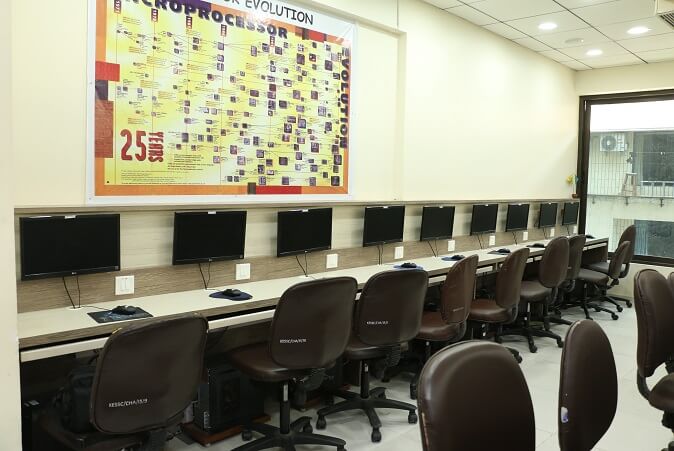
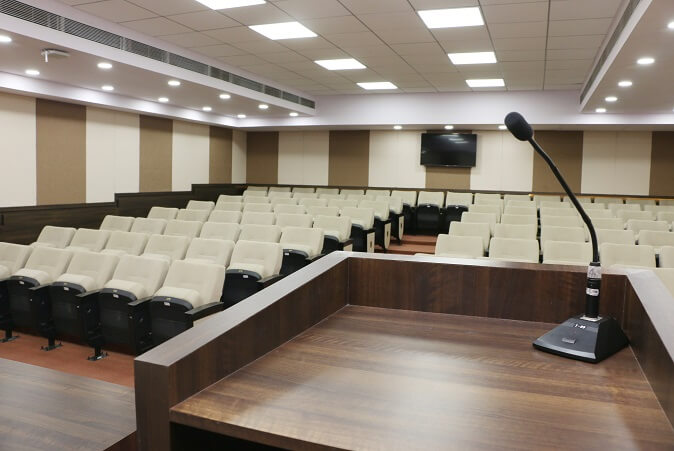
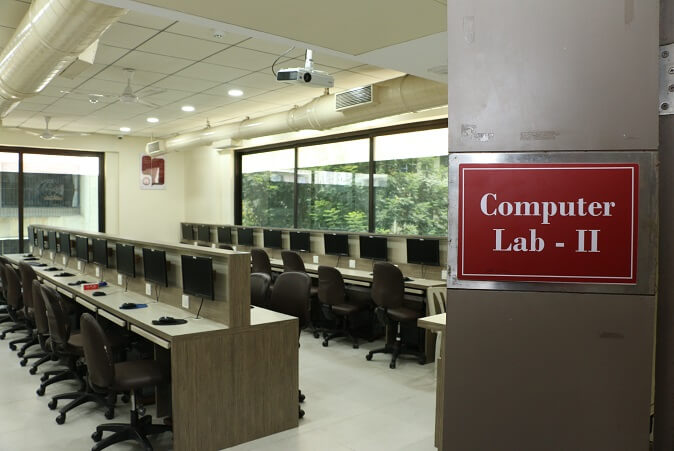
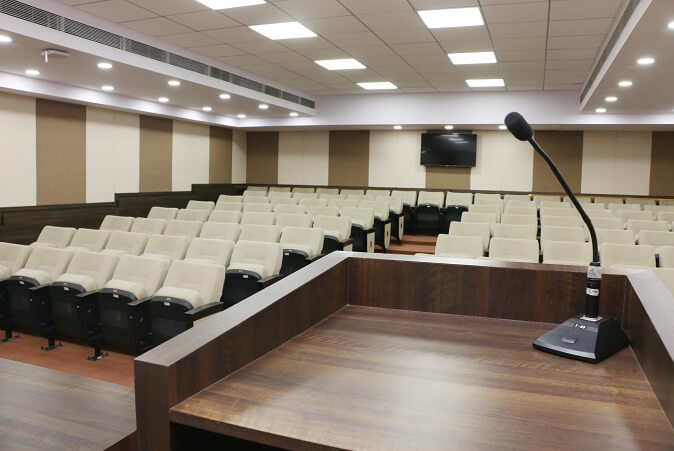
4. State-of-the-Art Facilities: Utilize cutting-edge media labs and production studios that provide a professional environment for learning and creativity.
5. Career Support: Our dedicated placement cell helps students connect with top media houses, advertising agencies, PR firms, and digital platforms, providing guidance and support throughout the job search process.
6. Holistic Development: We emphasize the development of not only technical skills but also soft skills such as communication, teamwork, and leadership, preparing students to excel in diverse roles.
The MACJ program at KES Shroff College empowers students with critical thinking, research capabilities, and strategic expertise, enabling them to excel in diverse and evolving roles within the media and communication industry.
WHY THIS PROGRAMME
The Master of Arts (Communication and Journalism) – MACJ program at KES Shroff College is designed to prepare students for leadership roles in the rapidly transforming media and communication landscape. Here’s how our program empowers students to excel:
- Advanced Expertise: Students develop specialized knowledge in journalism, print media production, media research, and strategic communication, enabling them to take on complex roles in the industry and academia.
- Industry Integration: Strong industry linkages, guest lectures, and an active alumni network provide valuable exposure, mentorship, and career opportunities.
- Research & Critical Thinking: The program encourages analytical thinking and in-depth research, equipping students to contribute meaningfully to media scholarship and evidence-based communication practices.
- Innovation & Digital Readiness: With a focus on emerging media trends, communication platforms, and storytelling techniques, students are prepared to adapt and innovate in a fast-changing media ecosystem.
- Career Pathways & Industry Readiness: The comprehensive training equips students with versatile skills and industry readiness, opening pathways to diverse career opportunities across media and communication sectors.
Join the MACJ program at KES Shroff College to advance your academic journey and become a skilled communication professional, ready to lead and innovate in the evolving world of media and journalism.
PEO 1: To have strong multidisciplinary academic foundation of various social, economic, political, environmental, and psychological issues.
PEO 2: To integrate theory and research through deliberations on practical applications of concepts.
PEO 3: To have sharpened ability to converse critically and innovatively about real-life issues.
PEO 4: To be able to demonstrate skill sets as per industry requirements in respective fields.
PEO 5: To be able to engage in discussion and reflect human values.
PEO 6: To be able to synthesize aesthetic, social and cultural domains of knowledge.
After completing the program, student will be able to:
PO1: Demonstrate multi-disciplinary knowledge and understanding of various socio, economic, political, psychological, linguistic and environmental disciplines.
PO2: Demonstrate the ability to listen carefully and express themselves confidently in a clear and concise manner, thereby leading to meaningful exchange of thoughts/ ideas with various sections of the society.
PO3: Critically evaluate and reflect upon practices, policies and theories and formulate coherent thoughts for real- world application.
PO4: Analyze, interpret, and draw conclusions from qualitative/quantitative data and apply the concepts / learning in socio, economic, political, psychological, linguistic, and environmental disciplines to analyze and address real life problems situations as open minded and rational citizens.
PO5: Develop the skills of observing, inquiry, questioning, problematizing, synthesizing, articulating, and establishing cause and effect in one or more humanities discipline and real-life situations which are necessary for learning throughout life.
PO6: Develop the values of co-operation, co-ordination, teamwork, respect, understanding and tolerance across different and globally diverse groups and aspire for an inclusive society for the betterment of all by challenging the challenges.
PO7: Access and use Information and Communication Technology (ICT) in various learning experience; use appropriate digital mediums/software for gathering, storing, and disseminating information in a simplified way.
PO8: Set simple, measurable, attainable, realistic, and time- bound goals for one-self and work in that direction to achieve them.
PO9: Appreciate diversity of language, norms, values, and beliefs of multiple cultures at regional, local, national and global levels making them capable to integrate and engage in a multi-culturally diverse society.
PO10: Embrace moral and ethical values in conducting one’s life, formulate a position/argument about an ethical issue from multiple perspectives, use ethical practices in all work and research avoiding fabrication, falsification, or plagiarism.
A Master of Arts (Communication and Journalism) – MACJ degree from KES Shroff College prepares students for advanced and specialized roles across the media and communication industry. With a strong foundation in communication theory, journalism, media management, research, and strategic practices, graduates are equipped to take on leadership, analytical, and creative positions in a competitive media landscape. Here are some of the career paths available to our graduates:
- Senior Journalist / Editor: Produce in-depth news stories, editorials, and investigative reports across print, broadcast, and digital platforms. Apply advanced journalistic skills and ethical practices in reporting and editing.
- Communication Strategist: Design and implement strategic communication plans for organizations, integrating audience insights, media trends, and brand objectives.
- Public Relations Manager: Lead and manage PR campaigns, develop communication strategies, and build strong relationships between organizations and their stakeholders.
- Advertising & Brand Strategist: Conceptualize and execute impactful advertising campaigns, combining creativity with market research and consumer behavior analysis.
- Media Manager: Oversee media organizations or departments, handling operations, content strategy, and business aspects informed by media management and economics.
- Research Analyst (Media & Communication): Conduct audience and media research using scientific research design methods to generate insights for policy-making, media planning, and communication strategies.
- Content & Editorial Specialist: Create, curate, and manage high-quality content for print and digital platforms, with a focus on storytelling, audience engagement, and editorial standards.
- Print Media Specialist: Work in newspaper and magazine production, focusing on writing, editing, layout, and content development for print publications.
- Strategic Communication Consultant: Advise organizations on internal and external communication, crisis communication, and long-term communication planning.
- Entertainment & Media Analyst: Analyze trends in entertainment media, audience preferences, and industry developments to inform content creation and media strategies.
COURSE CURRICULUM
SEMESTER 1
Major
- Communication Studies
- Journalism Studies
- Media Management and Economics
- Writing for the Media –1
Major Elective Courses (Any one)
- Production for the Print Media
- Preparing a Public Relations Campaign
Research Methodology
- Social Science Research Design
SEMESTER 2
Major
- Audience Studies
- Entertainment Studies
- Strategic Communication
- Writing for Media – 2
Major Elective Courses (Any one)
- Media Laws
- Preparing an advertising campaign
On Job Training/ Field Project
- Field Project / OJT
SEMESTER 3
Major
- …..
- …..
Major Elective Courses (Any one)
- ….
- …
Core Course
- ….
SEMESTER 4
Major
- ….
- ….
Major Elective Courses (Any one)
- ….
- ….
Core Course
- ….
HOW TO APPLY
The admission procedure usually starts in June after the results of Undergraduate Programs are declared:
- Fill the Pre-enrollment form of the University of Mumbai through the University portal (https://muugadmission.samarth.edu.in/). Select the autonomous option programmes offered by KES Shroff College.
- Fill online admission form by registering yourself on https://enrollonline.co.in/Registration/Apply/kessc .
- Click here to know more about the first-year registration process.
- Upload a copy of the pre-enrollment form, HSC mark sheet/Degree Certificates/digital result, caste/reservation certificate if applicable, and E-Suvidha ticket.
- On the declaration of merit list (first then second then third if applicable) pay the fees along with submission of the documents such as Undertaking regarding admission confirmation, SSC(X marksheet), Leaving Certificate, Adhar card, scanned copy of Cheque book leaflet/bank account details and transfer certificate in case the student is from outside Maharashtra.
- For further details and to know more about the college visit the Admissions link.
- Schedule of Admission is uploaded under Notice section of college wesite (kessc.edu.in).
Eligibility for M.A. Communication and Journalism(Part I)
- Graduates in Multimedia and Mass Communication and / or equivalent degree from any recognized universities
- Graduate with 4 year U.G. Degree (Honours / Honours with Research) with Specialization in concerned subject or equivalent academic level 6.00 . OR
- Graduate with four years UG Degree program with maximum credits required for award of Minor degree is allowed to take up the Post graduate program in Minor subject provided the student has acquired the required number of credits as prescribed by the concerned Board of Studies.
Eligibility for M.A. Communication and Journalism (Part II)
- A candidate is eligible for admission to MA Part II if she/he has passed in M.A. Part I.
- Allowed to keep term (ATKT) before/after supplementary exams.
Total no. of Seats: 20
Reservation of Seats: Reservations are as per the Government policy.
Fees: As prescribed by the University of Mumbai. The details have been mentioned on the college Notice board and the College website http://www.kessc.edu.in
Duration of Programme: 4 Semesters spread over 2 years.
Enforcement of Attendance:
Our college is a pioneer institute in introducing the computerized attendance system. The computerized defaulters’ lists are displayed division wise regularly at the end of every month on the Students Notice Board. The students failing to fulfill the required attendance shall be DETAINED and shall not be permitted to take the Annual / Board examination. Warning letters from the Principal are sent to parents of the defaulting students. The letters are given to the concerned students by the class teachers in the classrooms. The students must hand over these warning letters to the parents. Students should note that fulfilling the attendance requirement alone will not qualify them to appear for the examination. Their academic performance should also be to the satisfaction of the principal.
General Rules & Regulations:
- Every student should obtain an ID card and show at the entry.
- Students should not loiter in the corridors when the lectures are engaged.
- Giving proxy attendance is a serious act of indiscipline.
- Students applying for certificates/testimonials and attestation should first contact the college office.
- Ragging is strictly prohibited on the college premises.
- The use of mobile phones inside the college is strictly prohibited. If caught using a cell phone it is confiscated for a period of 1 year.
Punitive Measures:
- Warning
- Cancellation of admission
- Refusal to grant admission in future
- Withholding or withdrawing of University exam form
- Expulsion / rustication from college
- Fine not exceeding Rs. 300
- Non-refund of fees and deposits
- Suspension for a specified period